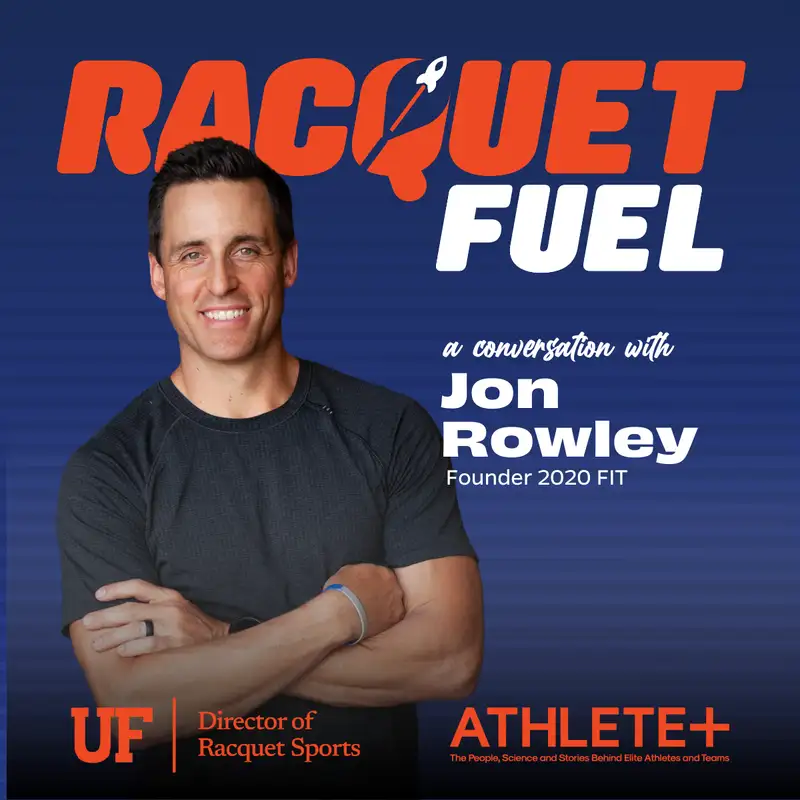
Build a “Work Hard, Be Kind” Culture: How Fitness CEO Jon Rowley Scaled Community, Kept Talent, and Stayed on the Floor
Calling all coaches, front desk staff, pro shop managers, and aspiring directors. Are you ready to take your career to the next level? Enrollment is open for the new University of Florida director of Racquet Sports course number one, facilities operations and marketing in the era of complimentary Racquet Sports. Our popular UF curriculum is now available to everyone. This fully online self paced course was designed to be easy to start.
Kim Bastable:No application, no prerequisites. Just bring your interest and your ambition. You'll gain practical tools in facilities and operations and marketing across tennis, pickleball, paddell and more. You will earn confidence and competence and continuing education credits. And if you want to complete the respected UF director of Racquet Sports curriculum track, you will move on to course number two after completion of course number one.
Kim Bastable:Course number one is just $1,295 and for $100 off, use code r f 100 upon checkout. That's just for our Racquet Fuel listeners. Step into the future of Racquet's leadership and enroll today.
Episode Narration:Welcome to Racquet Fuel, where we launch into great conversations and share powerful tools to help you become a stronger Racquet leader. Your hosts are Kim Bastable, a former all American tennis player and now the director of professional rackets management at the University of Florida, and Simon Gale, the USTA senior director of Racquet Sports Development. Today, Kim and Simon talk with John Rowley. John runs a fast growing fitness and longevity focused gym that has amazing culture and a very high member retention. How does he do it?
Episode Narration:Here are Kim and Simon.
Kim Bastable:Welcome to Racquet Fuel. Today, you, Simon, myself, we're all gonna learn from an entrepreneur in the fitness world. He started his fitness business in Chicago, transitioned it to another city, my city, Kansas City, survived through COVID when he was fairly young in the business and now has just a vibrant community and a strong business model. And I'm just excited because this is what we want tennis clubs to do. Right, Simon?
Kim Bastable:I mean, this is we're gonna learn how to do it right from a entrepreneurial aspect.
Simon Gale:Yeah. I love seeing success stories outside of the tennis industry. I think we can learn a lot from each other in within our industry but there's a lot of great stories and a lot of success stories that maybe approach a little differently. So best practices from outside our industry are always fun to listen to. So looking forward to hearing your story, John.
Simon Gale:Thanks for joining us.
Jon Rowley:Glad to be here and and appreciate the opportunity to share the overlap because I think there's a lot more similarities between tennis and fitness than there are differences for sure.
Kim Bastable:Yeah. So let's just start with where the business is now. Can you give us kinda what what's it look like today? And then we'll go backwards.
Jon Rowley:Sure. Today, we've got a little over 500 clients and a 15,000 square foot. From the outside, everything looks great. A 15,000 square foot building, 500 clients, so seven full time people and a couple dozen part time staff. But when you look beneath the hood, what we have is is a connected community of people that are all trying to live their best life.
Jon Rowley:And at the end of the day, what we help facilitate is getting that snowball rolling for for our clients. So going to the gym or or doing your your tennis workouts makes your day better, but it's not necessarily gonna make your life better. It's it's those habits though that that that we help reinforce by having a positive community of people that are actually looking forward to seeing you on a to day basis. So we do group fitness. We do private training.
Jon Rowley:We've got a seven different types of classes that we offer, everything from strength training to cardio and boxing, yoga, and everything in between. But I guess the the common thread is what we're doing in there is is the part of a bigger picture of of making you the most optimal person you can be, the most optimal employee or spouse or mom or dad. Whatever it is you do outside our gym is far more important than the hour that we might get with you.
Simon Gale:So John, I love that word you used, facilitate. We, in the tennis industry, often hear that we're in the relationship or hospitality industry and tennis is the vehicle. So very similar as you said You are. In your intro with the the similarities. How did this start?
Simon Gale:When did the dream begin in your mind and and what kind of drove you to to make this decision? Because I did a little research on you and you have at least one degree, but it looks like maybe two degrees in finance and maybe accounting. Worked for Accenture for a while and gave up what would been probably steady paycheck and gave it all up to be in the fitness industry and rolled the dice. So tell us where that all came from.
Jon Rowley:You're accurate that I had no idea what I wanted to do with the rest of my life, so I just went and got two degrees that I thought would be functional at some point. And so I did accounting and finance. Knew at some point in time, I've I've I come from a kind of an entrepreneurial background. Both my parents have ran businesses, and I knew that was something I wanted to do along the way. I didn't know what that vehicle was going to be.
Jon Rowley:And and you've mentioned hospitality, so my parents were in the restaurant business. I was always in the service side of things. And so you go through school and I started doing this pursuit, probably like a lot of people in the tennis industry, is selfish. It's you find a passion, something you love doing, and then you love doing it so much that you want to share it with others. You want to be that vehicle that brings this love and energy into someone else who hasn't quite felt it yet.
Jon Rowley:So I started doing Ironman triathlons, and it was really an excuse early on for me to not drink alcohol. Because if I went to Simon and he's busting my chops about not going to a party on Friday night, I'd say, hey, man. I have a 60 mile bike ride tomorrow. And then immediately, you kinda lay your sword down and you kinda let me be, and I'm not I no longer have to party. I have a legitimate excuse.
Jon Rowley:So started doing Ironmans, and then my girlfriend at the time said, this is enough. I'm not I'm not participating in this. You're you're getting up early. You're going to bed early. You're sacrificing everything, our relationship for these Ironmans.
Jon Rowley:So so I said, fine. I hear what you're saying. I'm gonna still do the Ironman, but I have to train a different way. So I just I I changed my modality of training to line up with our lifestyle, and that allowed me to train for six or seven hours a week versus twenty, Still do the Ironman and actually do better. And then long story short, friends started asking, Hey, can you can you train my girlfriend?
Jon Rowley:Can you train me? Can So in Chicago, we started doing that in parks, then any gym that where somebody else was already working out, they'd bring me in. I I train them while I was working for Accenture. So that that kinda got the hamster wheel going of what I'd say to somebody who who wants to get into a passion project. You you have to love it so much, your passion project, to keep your job, especially in in in the beginning.
Jon Rowley:Because what what I was never willing to do was to be flat out broke. You know, I didn't wanna just just be happy with my work every day, but not be able to afford a place to live or or the prospect of starting a family or the prospect of of of being married and and living what many would consider a quote unquote normal life, you know, being able to afford groceries and go on a trip every now and again and not being completely married to your your hobby. So I started training in the morning. I trained from five to eight. I'd go to Accenture, work from eight to five, and then I tried train from five to eight.
Jon Rowley:And that started in Chicago, that lasted that lasted all of at least three years where I kept my job and kept the hobby. They were not exclusive. You know, you you if you're coming from money and you have that launching point, maybe you can make that happen, but I still would advise against that. Even if you had saved up a bunch of money to make to jump into your passion pursuit. I just think it shows you early on if you're gonna have the grit that it takes to to stay in it.
Jon Rowley:Because looking back, that wasn't the hard part of the of the business. That was exciting. There was no overhead. We didn't have a track record. We didn't have a huge mortgage payment or a a lease payment.
Jon Rowley:It was just kind of cash in cash out. It was the building phase. So we moved to Kansas City as Kim alluded to, which is where my wife is from, and I started in the garage here. Kept my job, kept training in the mornings and and at night, and did that for way longer than I wanted to. I I wanted to quit my job and rely on my wife's salary to support the house and just and just build the business.
Jon Rowley:Fortunately, I took her advice and didn't do that because, you know, her her contention is if you love this that much, you'll figure it out. Like, you you can do both. And it forced me operationally to be efficient and to have my systems in place so that if I had a half hour to manage the books in a day, that was that would be more than adequate. And I think that's as we've scaled, that has maintained a a consistent and important part of the business. Otherwise, you're gonna fill your day.
Jon Rowley:So you might have four sessions in a day, and then and say you have four or six hours to do your fluff work. Well, guess how long it's gonna take you to do your administrative work? It's gonna take however much time you have is is what you're going to fill it with. So having those bookends of like, I've got to go to my real job at that time for a period forced me to be efficient. But as we started going, we went from my garage to a commercial space, which was temporary because we signed up a pretty big lease.
Jon Rowley:And a lot of that was all leap of faith type stuff. And the reason we wanted to go from a place where I was actually making a pretty good income in my garage to something bigger was, one, I want to be able to change more lives, I want to be able to help more people, but also I wanted to make it real. I wanted to make it a viable business so that I mentioned earlier, like, so you could go on vacation, so you could raise a family, so you could do these things and not just be in the grind and just spit out ten years later when you're early thirties wondering, alright. What am I gonna do? Now I gotta go get a real job.
Jon Rowley:Now I'm gonna go try and sell insurance somewhere. I'm gonna go work for a a wealth manager. I'm sure you've seen this in your industry is I'm not speaking for myself, but in general, you have somebody who's talented. They've got ten years of experience. They just got good.
Jon Rowley:Like, they're just getting good now where they can really start to help people, and that's usually when burnout happens. So I I was thinking about burnout long before it was ever, like, in the front of my mind because I wanted to be in this for a long time, not only for me, but for my team that's that's following in behind me. I I don't want them to do this. You know, we hire somebody who's 22. I I don't want he or she to be thinking, okay.
Jon Rowley:I'll do this for five years in my early twenties, and then I'll and then I'll spin out. I want them to look at this as, a viable career. Same way you look at a a physician. You know, your physician drives a BMW, goes on nice vacations, has a second home. Of course, they went to med school and did all these things, but at the end of the day, the impact that one can have, it should not necessarily be equated to their their schooling or whatever their acronym is behind their name.
Jon Rowley:It's the impact they're able to have one on one, as you said, in that hospitality, that service industry. So we see our people a handful of times a week, and I view that as an opportunity in the long run to get the compensation online with somebody of the professional class. And I don't see any shame in that, so long as you keep your talent around. I think that's my big driver.
Simon Gale:So when you talked about changing your schedule and lifestyle for a girlfriend, did that girlfriend end up being your wife?
Jon Rowley:She's my wife. Yeah, absolutely.
Simon Gale:She sounds incredibly smart because you've referenced her three or four times already in ten minutes.
Jon Rowley:I'm not here without her.
Simon Gale:So I'm I'm picking up on that but I also wanna seriously ask you, how important and I have another question after this though, but how important is that support system for you to be successful? Because we we sacrifice a lot of hours, we we work early mornings, late nights, just like the fitness industry. We work on weekends and we talk a lot about lifestyle and hours and balance and that sort of thing and you've referenced that. But if you don't have the support system as a family where there's some understanding, it can ruin marriages as well. Yep.
Simon Gale:So how important has that been for you?
Jon Rowley:It's it's been everything that she's she's been on the journey with me and she knows that I am a I wouldn't say I'm a full person. I'm still working on becoming a full person, but I am my most full self when I am putting my skills to to work to to help people. It required a lot of communication early on, a lot of hard conversations during during the interim. And for me to tell you today that it's easy would be a flat out lie. It is still something that we work on on a consistent basis because I am completely and honestly sucked into my work.
Jon Rowley:I am drawn to it. I am pulled to it, and I have had to significantly work on being pulled to the home life. You know, when you're you've been around you're around all these happy, positive, healthy people at the gym who want to hear your advice, and you can see the impact that you're making. It's a really good drug that you get pulled into, and it's really easy, and it was for me early on, to say I'd be home by 07:00, and then you get pulled into a conversation and 07:30 rolls around. Hey.
Jon Rowley:We were supposed to have dinner at 07:00. Where are you? Well, I coached until 07:00. That doesn't mean I'm done at 07:00. That you know, there's that this carryover.
Jon Rowley:So I really had to just kinda man up and own the bookends of my day and and treat my wife like a client. If I tell Kim I'm gonna be there at 07:00, I'm gonna be there at 07:00. So I I think my advice is show respect and you'll get it, and that's something that I I still work on. You ask her. I mean, I'm still working on that right now.
Jon Rowley:And so the the more that I kinda put into she has her own career. She's not involved in the business on the day to day. The more respect I I show for her, the more the more I get back. But there there were periods, speaking financially, where I was investing everything back in the business and she was keeping the home front going. And that puts a stress on her as it does me, but it's different because I get to see all the positive reinforcement every single day.
Jon Rowley:She just sees that I'm not putting any money in the bank. And then I come home tired. Early on, you know, I coach six, seven, eight classes a day for a week and my throat's scratchy. And on Friday night, no, I don't wanna go out to dinner. I wanna go to I wanna go to bed.
Jon Rowley:I I think lifestyle is a huge piece of it, making sure you're you're well enough and healthy enough that you're still bringing your best self home so that your spouse or significant other still wants to put that energy into you to be successful.
Kim Bastable:That's excellent. So we need to talk a little bit about the pivot options. I think we're curious. What what was your vision? Is this the vision, like, today?
Kim Bastable:How many years have you been? Give me the year number.
Jon Rowley:We started in the garage in 2012, and I had I had four clients then. By the 2013, we were still in the garage. I had a dozen. Really, we started really slow. I didn't know anyone.
Jon Rowley:It's just word-of-mouth, and I was in the garage.
Kim Bastable:Yeah. So it's thirteen years. How have you pivoted? What did you envision where you are today? Did you make some decisional changes along the way?
Kim Bastable:Tell us that story.
Jon Rowley:Yeah. I I knew I wanted to build something of significance. If I told you I'm looking out my office window, my my house is 300 yards from the gym, and we're in a dream building that I can't tell you it fell on our lap. We we made some things happen to get it. I I knew I wanted to build build something that had that had a real team of people, but, honestly, it's it's turned out better than than I imagined.
Jon Rowley:And the deal with that is if you if you get up at 04:30 in in the morning for a bunch of years, seven days in a row, like, things just eventually start to happen. I think what I'm most pleased with is, you know, our our two core values are work hard work hard and be kind. And that stems from reflecting on, you know, raising kids. So I got three boys now. We have three boys, eight, six, and three.
Jon Rowley:Kinda talked over the years, like, what do we want these kids to be like? Who do we want them to be? And care if they get straight a's? No. Do we care if they're the best athletes?
Jon Rowley:No. But they sure as heck better work hard at whatever they do. Playing the clarinet or shooting bow and arrow, I don't really care. They're gonna work hard at whatever they do, and then they're sure as heck gonna be nice to people. And so we adopted these core values when when Duke he was, like, one one years old.
Jon Rowley:We we hadn't even started construction on the new building or the addition yet. That's what I'm most pleased with with our community. It's great having a big building. Do we wanna eventually have multiple locations? Probably.
Jon Rowley:I I've kinda stepped back on that knowing that where I am in this incubation period right now, parenting, having these young kids, I could put my foot on the gas really easily with the business and get distracted on the home front. Again, I'm lucky that Britney stayed with me through that initial phase. But the thing I'm most pleased with is no level of success is as exciting to me as the compliment I get of everyone at this gym is so nice. People are so nice. And to me, like, that that's everything.
Jon Rowley:We've just got this this awesome community. They come in. They they do their best each day, and they're nice because at the end of day, hitting a tennis ball is not easy. Doing it a whole bunch of times hard and fast is not easy. You know, doing squats and pushes and burpees, not easy, and a lot of times, not even fun.
Jon Rowley:Like, not an enjoyable thing to do in in the time. So the fact that we're surrounded by a bunch of nice people makes that barrier to entry just that much that much easier.
Simon Gale:So you talked about culture and your values there, and I really picked up and and like the word nice. It's simple, But, you know, I think we all thrive to have that whether it's our front desk reception who see people come in and they're the first point of contact, the last point of contact, and then they have their lesson in between and they're interacting with our staff. How do you recruit for that? How do you hire for that? It's don't have a lot of time with somebody when you're interviewing.
Simon Gale:How do you determine that someone's gonna fit into that nice category and be what you need for your culture? And do you find some of those people within your gym? Are they clients who say, I wanna I wanna be part of this?
Jon Rowley:Two part answer. One is the we'll call them the randoms off the street that we hire from a resume or from a job application. We filter through our interview process, which involves them coming in and doing some work. Not not doing their job, but actually coming in and taking a class. And and seeing seeing how they operate, seeing how they communicate, seeing what they look like when they're under a little bit of duress.
Jon Rowley:Like, you you play tennis against some like, you if tennis, golf, fitness, pick a sport, play hard against somebody and you get to know them really quickly. So that's a part of our interview process of of having our especially our our coaching staff come in and actually participate before anyone's hired. The other part of the answer is we have had really good success hiring from within. So so we've hired a handful of people who, were clients, and that's a really effective interview process when they are being interviewed and they don't know it. And, again, it's just a a longer way to get to know somebody.
Jon Rowley:I guess the thing to answer Kim's question again, what I'm most pleased with is everybody has a chance to be a jerk. We can all can all do it. I'm guilty, but when I'm around a bunch of other nice people, I'm insulated. I'm encouraged to act as if. So that that kinda comes from the the culture piece of it.
Jon Rowley:What I'm most pleased with is, you know, even if we have a bad apple every now and again, it's not enough to dilute or or it gets diluted overall. So I think when you bring in somebody in the organization, they're like, wow. Everybody says hello to each other. I have to say hello to each other. And then I find out that I like saying hello to people, and I like shaking hands or whatever the actual act is.
Jon Rowley:I think you you take the person who who may not be the most jovial happy person, but but they get brought into that culture, and then the best of them fortunately comes out.
Kim Bastable:I think you told me, John, that you don't allow guys to wear hats. Tell me the story on that.
Jon Rowley:Yeah. So most of the stuff is selfish and makes me sound like a bad person, but we don't use profanity or or coaching staff or anybody on on our team. Fitness is is a little bit looser. It can be. It can be loose.
Jon Rowley:It can be it can be unprofessional because we're just working out. We've got our Lululemon shorts on, and we just roll out of bed, and then everything's kinda kinda casual. We've tried to stay on the professional end of casual. Like, we're not buttoned up white polo shirts, you know, tucked in, but we wanna treat people with with respect and make sure that anybody, any age is is comfortable in the gym. So early on, we got rid of the ball cap deal because, you know, if I could wear a ball cap, I wouldn't have made sure I showered today.
Jon Rowley:I I could roll out of bed, throw a hoodie on, throw a ball cap on, and and go to work. And just that act of waking up, making your bed, showering, shaving, whatever it is, gets the ball rolling for the day for you to act as professional. So, you know, we instituted that. You know, our our apparel standards are are athleisure. We're in your world, like, wear either a nice gym shirt, no holes or, you know, nice, you know, Lululemon shorts.
Jon Rowley:But the other thing, besides the swearing and not wearing hats is this is probably different than fitness, but people have to keep their shirt on. There's certain subsets of the world where it's like a thing to take your shirt off while you're training. Well, not everybody's accepting of that. And again, we want everybody, whether you're 75 years old or 15 years old, to feel and be comfortable.
Kim Bastable:Yeah. So that's that that I think that's a great story that helps people understand the culture that you've built there, which is just very professional, very serious about your job. And I think, like you say, it's a casual place. It's a friendly place, which I believe every tennis club should be as well. So you also mentioned that you do hire from within sometimes, which might mean those people are not certified fitness instructors.
Kim Bastable:So I'm a little curious on your education. What do you require? How do you do you pay for it? There's a lot of controversy in the Racquet's industry as to who might fund the education and the continuing education. So please give us that story.
Jon Rowley:Yeah. I can tell you what we do, but I don't I can't say that it's the right way. So when we either hire from within or or even outside, we require at least a level one certification. So from hiring a part time person, this is kind of where our gray areas kind of come black and white. We hire a part time person.
Jon Rowley:They generally are funding their certification. So they either come in with a personal training certification or a CrossFit certification or a an SCA certification. And that to me is just enough to get them into the door and and get them under our insurance. From there, it's and for our part time, we'll we'll fund their education. We basically allocate $2,000 a year per coach for training.
Jon Rowley:And sometimes it gets utilized, sometimes it's underutilized, sometimes it's it's overutilized. But zooming out, we want our people to continue to pursue not necessarily vertical accreditations, but horizontal. So where somebody may have an interest in women's health, he or she may go and take a a women's health specific course in order to be able to deliver better, more nuanced programming for a selective population, premenopause, post menopause, or or we're dealing with post postpartum or etcetera. So we've kinda rather than having depth of our team, we kinda wanna have as much width as possible because we deal with I'm thinking of a a gal this morning, glute issue, an elbow issue, a psychological issue with something that's going on the home front. We get it just like you guys.
Jon Rowley:Sometimes you're counselors and sometimes you're just treat teaching people how to whack it over over the net. Like I just shorten the answer is part time people generally pay pay for their own unless we approve it. So we're not gonna hire somebody off the street and tell them that we're gonna pay for their training. They would have to earn their way in. Our our full time people, we're looking to just use that example of hire that person that we love, who we've seen around.
Jon Rowley:We wanna hire he or she and then say that we're gonna fund their their education.
Simon Gale:So you have a traditional acronym as the leader of your business. You're the CEO, but maybe not your traditional CEO. What does that stand for? And as the CEO, how's that role evolved over the years from doing it on your own in the garage to building a business and building a team?
Jon Rowley:By definition, I'm our chief exercise officer. And my role today is top and bottom is the way I I look at it, is to be forward thinking. So at the very top of our hierarchy, leading our vision. Where are we going? Where do we want this business to be in one, three, ten years?
Jon Rowley:And being the the keeper of the culture. That's my one role. And for a period of time going back, oh, three, four years ago, I have kinda gotten out of the coaching. I was, to an extent, running the day to day, but really just kinda keeping an eye on the prize and not getting in too much of the day to day to ruffle feathers. Over the last three years, I've gone back to the bottom.
Jon Rowley:So so my role is one, leading the ship from the top, and then the other is on the ground coaching. So either coaching classes or or coaching one on ones. That to me, if I were to advise anyone who's in a a general manager type role or executive role and any sort of function, that has allowed me to keep my ear to the ground, not only with our clients, but, excuse me, with our team. In that, I'm just here in my office all day. It's kinda like, who is this guy?
Jon Rowley:What does he do? And now he comes in and he's telling us what to do. And you just don't have that buy in with your with your staff unless they see you in the trenches with them leading on the ground. So and then everything in between is is what I used to do. So I used to program every workout, clean every floor, do everything in in the entire business.
Jon Rowley:Now what I do is I get interested in things, hardcore focus on them, and then zoom back out and and kinda look at where where does my energy best applied right now? So is it you know, there's a period of time where some things I wasn't happy about in the facility. So I started, like, looking over our checklists, doing our checklist. Going and actually seeing the work helped so much to to be able to dig in, but then I don't have the bandwidth to go and do it. So I I need to be able to zoom in, spot a flaw, be able to identify what we need to do, or more or even better, spot the flaw and then ask somebody else how we should best solve this, and then let them go and solve it.
Jon Rowley:So today, it's trying to lead and demonstrate where we want the business to go. And then honestly, my passion is just being on the floor with people.
Simon Gale:So it sounds like John the leader has evolved as well and I I can relate to that. I think you just get a little wiser and understand how to manage your time best and how to empower people, delegate. I think they're skills we all learn as as the business evolves. But how has John changed as a leader through the years?
Jon Rowley:Well, in the beginning, I'll I'll just do it. I'll just I'm a worker. I will just keep working and working and working like a little puppy. Like, I'm just not gonna stop. So if you came to me with with something, I would just take it from you.
Jon Rowley:I'll do it. I'll do it, and I'll and I'll probably do a pretty good job. I'm not gonna do probably the best job that anyone could do, but I'm gonna I can guarantee I'll get it done, and I'll do a pretty good job. And as we grew, I the bandwidth, the bookends of my family probably saved my life. Like, my wife, thank God, she actually wants to see me.
Jon Rowley:If I didn't have her, I would just keep working. I would just keep working until, like, I had forcibly had to go to bed. So once I had the bookends of a family, it was like, alright. I can't do all of these things. I need to empower others who maybe on on their first take at it won't do as well as I would.
Jon Rowley:Right? But I'm able to amplify my time elsewhere, they're gonna be able to learn and eventually, and not too far down the road, do it better than me. I think it's it's sucking it up a little bit when you train someone. Where I have failed as a leader is is taking just trusting people too much. Not in a negative way, but not being there.
Jon Rowley:So I've been very fortunate to hire good people. And what I've told them is like, I I know you're a good person. I fully trust you, so let her rip. And thinking that everyone is like me and having this entrepreneurial mindset of like, I'm just gonna figure it out. Well, there's a lot of people in it, which is really good for your organization, that want to check a box.
Jon Rowley:They wanna go step one, step two, step three, and they wanna do their job and know that they did it right. Where I look at step one through 10, I'm like, ugh. I don't need to read all these steps. I just need to get this work done, then I'll come back and maybe look at the steps later. Probably not, though.
Jon Rowley:So where I failed as a leader is is setting people up for failure in that I present them an opportunity and just let them try to figure it out versus looping back and and asking where they they need my help and support to help guide them through the process. So what you have to do early on is bite that bullet. This is gonna take twice as long for this person to learn this skill or this task than if you just did it. But if you just do it, you're always gonna be on that hamster wheel over and over and over again and never never break free. So what might take you an hour to do it today might take two hours to do it with a colleague and to train them, and then it might take another hour of follow-up just to make sure that they're following the process.
Jon Rowley:And then you just freed up, you know, an hour a week for the rest of your life going going forward, and they're gonna be able to train the next person, etcetera. So I think the hard part for the entrepreneurial mindset is I'll just do it. I can do everything. I do everything pretty well. Transitioning to I need to train everybody to do everything better than I
Kim Bastable:This is exceptional, Simon. I'm just my my head is spinning. This is exactly what we wanted and I'm curious what your two or three takeaways are as to how similar this is to the tennis industry because I think it's spot on.
Simon Gale:I think John and I could become best friends really quick. I think we could be therapists for each other.
Jon Rowley:Yes.
Simon Gale:It's it's eerily similar to my journey with family and so on as well and then you used the the term bookends. I would be the same. I could work until I'm exhausted and go to sleep and pick up and do it again the next day. So I love how vulnerable he's been with with talking about that and and how I failed as a leader. I think it's it takes a lot of courage or self awareness to make a comment like that.
Simon Gale:I think it's great leadership. I love the comment about vertical and horizontal education. Not everybody wants to be the chief exercise officer. Some people wanna be great trainers and how do we develop them so they don't get stale. And you're clearly invested in your people and passionate about what you do.
Simon Gale:So I I think it's been fantastic. I appreciate you sharing so much with us.
Jon Rowley:Well, you guys you have me fired up now on a Friday, which which I'm grateful for. It's it's fun to go back and and relive it a little bit. I guess my parting call this advice, but just reflection is you miss those times where you're, like, in the grind. And and if you don't wanna stay there forever because you will burn out, but it's really fun to reflect on and and remember kinda where where you've been because we didn't even get into the COVID thing, which is a whole another deal. But if you've not had those forging moments where you've been in the grind, you'll have a little bit more doubt down the road when things get hard.
Jon Rowley:And so if things aren't going to be rainbows and unicorns the rest of your life, you are going to have hard times in business. And personally, I mean, there's just a big crossover between what you guys do. It's personal and professional in one setting. So being able to go through those hard times just help helps solidify your confidence in knowing that you'll be able to make it through the next hard time as well.
Kim Bastable:Yeah. And I think it's just the reality of that. It's so hard to be an entrepreneur, and it's so hard to to start a tennis club or or to run a tennis club or to buy into a tennis club and try to figure out. You have the, I would say, somewhat advantage of starting from scratch. Can kinda invent your own invent your own story, but there are many people who buy into clubs, and then they have to undo policies that were a challenge, and then they have to build new culture, and that's an individual challenge in and of itself.
Kim Bastable:So this is a conversation we could go on for a long time. I have a great respect for the way you run your business. I prefer to come more often than I do, if my day job didn't take me, and I'm sure that's what a lot of people would say. I run into people constantly who are there at 06:15 very often in the mornings. That would not be my time of day, but I love what you've built.
Kim Bastable:The people do. They just love the community, which is what I think every tennis club really needs and wants should build. So, Simon, do you have any final thoughts?
Simon Gale:No. I think that's a great way to summarize it. The parallels between our two industries and building a sense of belonging and community at your facility, whatever it is, is what we're all about. So inspiring stuff and I appreciate you taking the time, John, and I think people will really enjoy this.
Kim Bastable:Yes. Thank you very much for for being here today.
Jon Rowley:My pleasure, guys. It's great to chat.
Kim Bastable:That's what we have for you today on Racquet Fuel. We hope you're inspired, and we'll share this with others. We'll see you next time.
Episode Narration:That's all for today, but we're not out of fuel. You can find more information and resources in our show notes and by visiting racketfuelpodcast.com. If you liked what you just heard, please subscribe. And also, leave a review, which helps other people join the mission to become stronger Racquet's leaders.
Conclusion:This podcast is a production of Athlete Plus, the people, stories, science behind elite athletes and teams. Athlete Plus is the official podcast network of the Institute for Coaching Excellence, a research, education, and outreach center in the College of Health and Human Performance at the University of Florida. The Institute for Coaching Excellence offers various online certificate programs and degrees in partnership with the Department of Sport Management. Learn more today at coaching.hhp.ufl.edu.